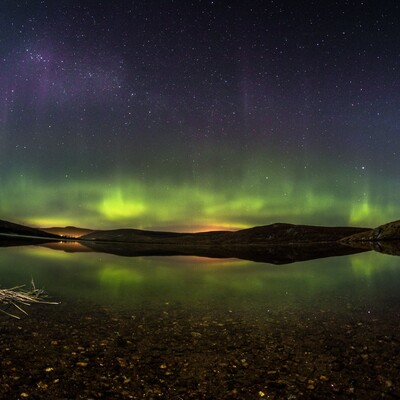
Clouds blocked reappearance, but I got this nice shot at about 550PM EDT
On Wednesday, June 17, skywatchers in San Jose will have the opportunity to witness a rare celestial event: the waxing crescent Moon occulting Venus. During a lunar occultation, the Moon passes directly in front of a planet, causing it to disappear from view and then reappear later from behind the lunar limb. Venus is bright enough to be visible in daylight, making this one of the few planetary occultations that can be observed before sunset. The Moon will be a thin, 11%-illuminated waxing crescent. Venus will disappear behind the Moon’s dark limb and reappear near the bright, illuminated edge of the crescent Moon.
This is among the last favorable Venus occultations visible from North America until the end of the decade.
Where to look: Look almost due east at midday. The Moon will be high in the sky (at an altitude of roughly 33 degrees).
When to look: For San Jose, the event occurs in broad daylight:
11:35 am Venus disappears behind the Moon
12:10 pm Mid-occultation
12:46 pm Venus reappears from behind the Moon
Duration of occultation: 71 minutes
Crucial Safety Warning
Because this event occurs during the day, the Moon and Venus will be relatively close to the Sun in the sky. Never look directly at or point a telescope/binoculars near the Sun without specialized solar filters, as doing so can cause permanent blindness. Find a viewing spot in the shadow of a building or a tree to completely block out the Sun while keeping the Moon in view.
After sunset, the show continues. The crescent Moon and Venus will remain close together low in the western sky, with Jupiter and Mercury nearby, creating an attractive grouping.
On Wednesday, June 17, skywatchers in San Jose will have the opportunity to witness a rare celestial event: the waxing crescent Moon occulting Venus. During a lunar occultation, the Moon passes directly in front of a planet, causing it to disappear from view and then reappear later from behind the lunar limb. Venus is bright enough to be visible in daylight, making this one of the few planetary occultations that can be observed before sunset. The Moon will be a thin, 11%-illuminated waxing crescent. Venus will disappear behind the Moon’s dark limb and reappear near the bright, illuminated edge of the crescent Moon.
This is among the last favorable Venus occultations visible from North America until the end of the decade.
Where to look: Look almost due east at midday. The Moon will be high in the sky (at an altitude of roughly 33 degrees).
When to look: For San Jose, the event occurs in broad daylight:
11:35 am Venus disappears behind the Moon
12:10 pm Mid-occultation
12:46 pm Venus reappears from behind the Moon
Duration of occultation: 71 minutes
Crucial Safety Warning
Because this event occurs during the day, the Moon and Venus will be relatively close to the Sun in the sky. Never look directly at or point a telescope/binoculars near the Sun without specialized solar filters, as doing so can cause permanent blindness. Find a viewing spot in the shadow of a building or a tree to completely block out the Sun while keeping the Moon in view.
After sunset, the show continues. The crescent Moon and Venus will remain close together low in the western sky, with Jupiter and Mercury nearby, creating an attractive grouping.
Tunnel vision!
Step inside the tunnels below our Paranal Observatory in #Chile. They connect the Unit Telescopes, which comprise the Very Large Telescope (VLT), to the control building where the VLT and its instruments are operated by observing teams.
And no worries: despite the eerie, sci-fi atmosphere, no drooling, man-eating aliens are roaming there, just astronomers and engineers 😉
Read more: https://www.eso.org/public/images/potw2624a/
📷 L. Sbordone/ESO
Rare meteorite may reveal clues to a massive lost world in our solar system, offering insight into cosmic history and planetary formation.
#Science #Space #Astronomy #Discovery #SolarSystem #GoodNews
Rare meteorite may reveal clues to a massive lost world in our solar system, offering insight into cosmic history and planetary formation.
#Science #Space #Astronomy #Discovery #SolarSystem #GoodNews