The Music Doesn't Sound the Same Anymore
@waltz6970@theunderstory.podmoodle.nohost.me Another fine essay!
Discussion
The Music Doesn't Sound the Same Anymore
@waltz6970@theunderstory.podmoodle.nohost.me Another fine essay!
It's hot y'all!
EDIT: my apologies folks, it was pointed out that this is probably AI slop, not just a copy pasta. That shouldn't take away the achievements of Mary, and I encourage you to look at the original sources to learn more about her and her achievements
Happy Brownie Mary Day
It was a Tuesday in 1981 when the San Francisco police kicked in the door.
Inside the small apartment, they expected to find a hardened criminal. They expected a drug kingpin. They expected resistance.
Instead, they found a 57-year-old waitress in an apron.
The air in the apartment smelled sweet, thick with chocolate and something earthier. On the kitchen counter, cooling on wire racks, were 54 dozen brownies.
The police officers began bagging the evidence. They confiscated nearly 18 pounds of marijuana. They handcuffed the woman, whose name was Mary Jane Rathbun.
She didn't look scared. She didn't look guilty.
She looked at the officers, smoothed her apron, and reportedly said, "I thought you guys were coming."
She was booked into the county jail. The headlines wrote themselves. A grandmother running a pot bakery. It seemed like a joke to the legal system, a quirky local news story about an older woman behaving badly.
But Mary wasn't baking for fun. And she certainly wasn't baking for profit.
To understand why Mary risked her freedom, you have to understand the silence of the early 1980s.
San Francisco was gripping the edge of a cliff. A mysterious illness was sweeping through the city, specifically targeting young men. Later, the world would know it as AIDS. But in those early days, it was just a death sentence that no one wanted to talk about.
Families were disowning their sons. Landlords were evicting tenants. Even doctors and nurses, paralyzed by the fear of the unknown, would sometimes leave food trays outside hospital doors, afraid to breathe the same air as their patients.
Men in their twenties were wasting away in sterile rooms, dying alone.
Mary knew what it felt like to lose a child.
Years earlier, in 1974, her daughter Peggy had been killed in a car accident. Peggy was only 22. The loss had hollowed Mary out, leaving a space in her heart that nothing seemed to fill.
When the judge sentenced Mary for that first arrest, he ordered her to perform 500 hours of community service. He likely thought the manual labor would teach her a lesson.
He sent her to the Shanti Project and San Francisco General Hospital.
It was a mistake that would change American history.
Mary walked into the AIDS wards when others were walking out. She didn't wear a hazmat suit. She didn't hold her breath. She saw rows of young men who looked like ghosts—skeletal, in pain, and terrified.
She saw "her kids."
She began mopping floors and changing sheets. But soon, she noticed something the doctors were missing. The harsh medications the men were taking caused violent nausea. They couldn't eat. They were starving to death as much as they were dying of the virus.
Mary knew a secret about the brownies she had been arrested for.
She knew they settled the stomach. She knew they brought back the appetite. She knew they could help a dying man sleep for a few hours without pain.
So, she made a choice.
She went back to her kitchen. She fired up the oven. She started mixing batter, not to sell, but to save.
Every morning, Mary would bake. She lived on a fixed income, surviving on Social Security checks that barely covered her rent. Yet, she spent nearly every dime on flour, sugar, and butter.
The most expensive ingredient—the cannabis—was donated. Local growers heard what she was doing. They began dropping off pounds of product at her door, free of charge.
She packed the brownies into a basket and took the bus to the hospital.
She walked room to room. She sat by the bedsides of men who hadn't seen their own mothers in years. She held their hands. She told them jokes. And she gave them brownies.
"Here, baby," she would say. "Eat this. It'll help."
And it did.
Nurses watched in amazement as patients who hadn't eaten in days began to ask for food. The constant retching stopped. The mood on the ward shifted from despair to a quiet sort of comfort.
Mary Jane Rathbun became "Brownie Mary."
For over a decade, this was her life. She baked roughly 600 brownies a day. She went through 50 pounds of flour a week. She became the mother to a generation of lost boys.
She washed their pajamas. She attended their funerals. She held them while they took their last breaths.
She did this while the government declared a "War on Drugs."
By the early 1990s, the political climate was hostile. Politicians were competing to see who could be "tougher" on crime. Mandatory minimum sentences were locking people away for decades.
In 1992, at the age of 70, Mary was arrested again.
This time, the stakes were lethal. She was charged with felonies. The district attorney looked at her rap sheet and saw a repeat offender. He threatened to send her to prison.
One prosecutor famously whispered to a colleague that he was going to "kick this old lady's ass."
They underestimated who they were dealing with.
They thought they were prosecuting a drug dealer. In reality, they were attacking the most beloved woman in San Francisco.
When the news broke that Brownie Mary was facing prison, the city erupted.
It wasn't just the activists who were angry. It was the doctors. It was the nurses. It was the parents who had watched Mary care for their dying sons when the government did nothing.
Mary turned her trial into a pulpit.
She arrived at court not as a defendant, but as a grandmother standing her ground. The media swarmed her. Reporters asked if she was afraid of prison. They asked if she would stop baking if they let her go.
Mary looked into the cameras, her voice gravelly and firm.
"If the narcs think I'm gonna stop baking brownies for my kids with AIDS," she said, "they can go fuck themselves in Macy's window."
The quote ran in newspapers across the country.
The court didn't stand a chance.
Testimony poured in. Doctors from San Francisco General Hospital wrote letters explaining that Mary’s brownies were medically necessary. Patients testified that she was an angel of mercy.
The charges were dropped.
Mary walked out of the courthouse a free woman. But she didn't go home to rest. She realized that her personal victory wasn't enough. As long as the law was broken, her "kids" were still in danger.
She needed to change the law.
August 25 was declared "Brownie Mary Day" by the San Francisco Board of Supervisors. It was a nice gesture, but Mary wanted policy, not plaques.
She teamed up with fellow activist Dennis Peron. Together, they opened the San Francisco Cannabis Buyers Club—the first public dispensary in the United States. It was a safe haven where patients could get their medicine without fear of arrest.
But Mary wanted more. She wanted the state of California to acknowledge the truth.
She campaigned for Proposition 215. She traveled the state, despite her failing health. She spoke in her simple, direct way. She didn't talk about liberties or economics. She talked about compassion. She talked about pain.
She forced voters to look at the issue through the eyes of a grandmother.
In 1996, Proposition 215 passed. California became the first state to legalize medical marijuana.
It was a domino effect. Because one woman refused to let her "kids" suffer, the public perception of cannabis shifted. The Economist later noted that Mary was single-handedly responsible for changing the national conversation.
She never got rich.
She had always joked that if legalization ever happened, she would sell her recipe to Betty Crocker and buy a Victorian house for her patients to live in.
She never sold the recipe. She never bought the house.
Mary Jane Rathbun died in 1999, at the age of 77. She passed away in a nursing home, poor in money but rich in legacy.
Today, over 30 states have legalized medical marijuana. Millions of people use it to manage pain, seizures, and nausea.
Most of them have never heard of Mary.
They don't know that their legal prescription exists because a waitress in San Francisco decided that the law was wrong and her heart was right.
They don't know about the 600 brownies a day.
They don't know about the thousands of hospital visits.
Mary didn't set out to be a hero.

@webhat@infosec.exchange that's an incredibly inspiring story. thank you for sharing
Humpback whales are interrupting Orca hunts
Humpback whales are interrupting orca hunts to rescue completely different species, swimming underneath a doomed seal and lifting it out of the water on their chest, or forming a wall between the killers and a grey whale calf, and scientists still can't fully explain why they bother to save animals they have nothing to gain from.
@3goodthings@fedigroups.social
Three good things this day
Woohoo! I just hit "publish" on my second #PersonalEssay!
The Music Doesn't Sound the Same Anymore was sparked when I learned that Clyde Stubblefield's 20 second drum improvisation on James Brown's Funky Drummer has been sampled over 1,000 times.
He was never paid any royalties.
Read it, and let me know what you think!
To stay connected and be visible in #student life we are (still) on #instagram.
But the longer we stay, the harder it becomes to defend that choice.
It clashes with what we stand for as a #library: trustworthy information, #OpenScience, #DigitalAutonomy & student wellbeing.
We want to explore alternatives and open up the conversation about what responsible (online) #communication with students could and should look like.
Read our story and share your thoughts:
https://www.rug.nl/library/open-access/blog/a-university-library-on-instagram-we-want-to-leave-but-then-what
@Bibliothecaris@social.edu.nl I know it's been a minute, but what did y'all decide?
Confidence Is Not the Same as Truth: What my mother, social media influencers, and AI hallucinations have in common
His confidence was palpable. The comments section was full of “thanks for this info” and “I'm so glad you took the time to research this for us”. It was easy to imagine hundreds of people nodding along, sharing with friends, and accepting this information as fact.
But that was just it. Everything didn't quite add up. A quick web search confirmed it. He was spreading pseudo-science to hundreds of people.
Our company recently blocked screenshots in outlook. Obviously there is a simple workaround. However, that senior and area management have started printing documents and taking pictures of them to share, tells me a lot about the calibre of person that has achieved those roles.
@fesshole@mastodon.social What about 'print to pdf'?
@datarama@hachyderm.io @futurebird@sauropods.win That video was absolutely incredible! Thank you for sharing!!
The Transparency Report was an Airtag
When somebody is consuming material wholesale and nobody will tell you where it is going, eventually you stop asking.
You put a tiny snitch inside the merchandise. 404 Media did exactly that.
A bookseller had received a suspicious order for roughly 1,000 books through Biblio. With the seller's cooperation, 404 Media hid an Apple AirTag inside one of them and followed the shipment across the country.
The dot stopped at Amazon.
@3goodthings@fedigroups.social
Three good things this day
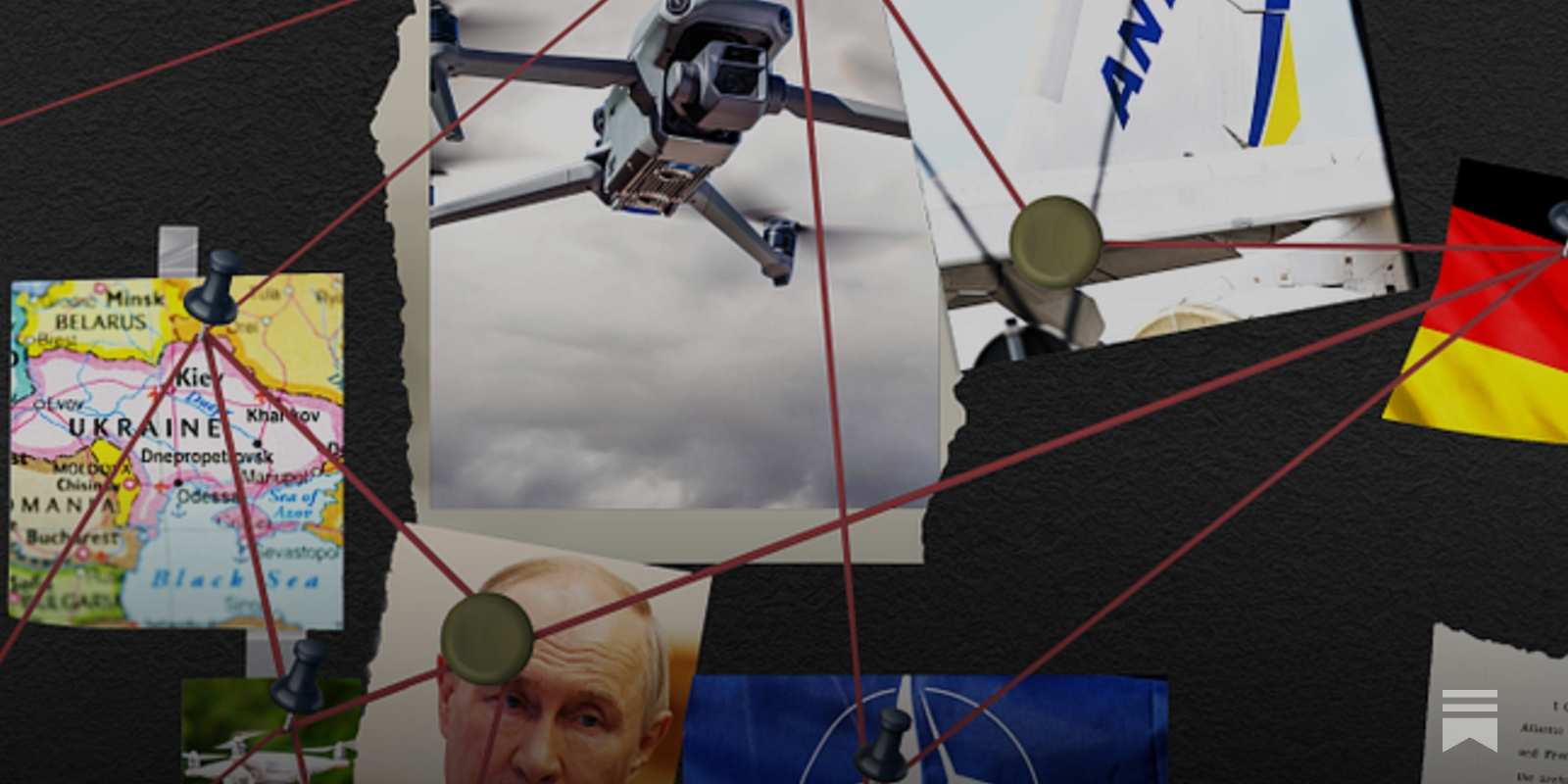
"What happened? Who did it? Can responsibility be proved? Was it criminal activity, terrorism, or state-directed sabotage? Or, perhaps most importantly, does it constitute an attack requiring a NATO response?"
https://www.thebulwark.com/p/how-a-german-bus-driver-may-have-averted-war-drone-leipzig-antonov-ukraine-putin?utm_source=threads&utm_medium=social&utm_campaign=subs
@bulwarkonline@threads.net From the article:
Deterrence depends not merely on capability but on an > adversary’s perception of political will.
That powerful sentence jumped at me while I was reading the article.
I'm forever grateful to the fediverse for helping me come out and accept who I really am.
Despite a few bumps, I'm immensely proud of this journey.
Together we can build a better future, and even my harshest critics can give great feedback, I love that.
Integrity and growth are essential traits for a good project leader, and I've become a better leader by listening to our community.
We build bridges to a better future, together ❤️
@dansup@mastodon.social In my opinion, there is an incredible freedom that comes with self-acceptance. I hope you have found that freedom!
I identified an undescribed species on iNaturalist. I'm feeling pretty proud of myself as a self-taught myrmecologist.
But let me be clear about what I did: I noticed a group of ants "stuck at the genus level of ID" this means that no one knows what species they are. I did the research to try to pin down the exact species and hit a wall.
Then I found out from more accomplished myrmecologists that, yes, these ants need to be described. They don't have a name yet.
1/
@futurebird@sauropods.win That is a great accomplishment! You have inspired me to start contributing to iNaturalist (again).
As an IT tech, anything plugged into a wall somehow becomes our fault if it stops working after we've been nearby. Once, I stared at a microwave, declared it fixed, and left despite never finding the problem they described.
@fesshole@mastodon.social I once did a Vulcan mind-meld with a desktop. It worked
Okay I'm a teacher. So let me explain this to you in as simple a way as I can.
Let's say I want to buy a cake. But not just any cake. A specialty cake for my nieces quinceañera. A cake like that costs at least $100 bucks. But I don't have $100 bucks. What do?
Well, I could save up to buy the cake. But that might take a long time and by then her quinceañera would be long over and gone. I could go take out a loan for the $100 bucks. But I don't want to take out a loan because it might make my credit look bad to have that much debt. So what's the solution?
Well if I'm particularly creative and not overburdened by an abundance of morality, the solution is easy. I make another me. A special me. A me designed for one purpose only - to saddle with debt.
So I create another Lana. A legal fiction. Let's call her Twona. Twona's only purpose in life is to get a bunch of credit cards and then cakes for my niece's quinceañera. Twona gets a MasterCard and a Visa, and puts $50 on each. When the cake arrives, Twona gives me the cake, and keeps the debt. And if the IRS or the banks ever come calling asking pesky questions about how I managed to afford a special quinceañera cake, I can legally and truthfully tell them I do not have any quinceañera credit card debt.
And you may be asking why the credit cards would do this. Why just give Twona those lines of credit, knowing that she was just going to buy a quinceañera cake with it. It's not like they can repossess a giant 5-tiered specially cake with "Congratulations Niece on Your Quinceañera" written on it in bright pink fluffy icing. No one would ever buy that from them. It's worthless as a repossessed asset. And the reason is that I signed an agreement with MasterCard and Visa saying that if they ever had to come collect on the debt, that I would pay them a certain amount of interest on the debt for the next 100 years.
So let's recap.
- I got: the cake, and no record of debt on my financial documents
- Twona got: the debt
- The credit agencies got: promise of residual income for the next century
Congratulations, now you understand how all these enormous data center buildings in rural places are being funded. Just take the quinceañera numbers and multiply them by 10 orders of magnitude. Meta and Amazon and Oracle and the rest of the tech companies are set to invest almost a trillion dollars in AI buildout just this year alone. And none of it is going on their financial documents. Because technically, none of them have taken out any loans. The loans are being held by shell companies created specifically for this purpose, with names like (I am not making these up) Beignet and Sopaipilla. These shell companies own the debt. And in return, Meta gets to build a $27 Billion dollar specialty data center building in the middle of rural Louisiana. And then Beignet rents that building to Meta. Nobody except Meta will ever use that building. It exists for one purpose only. But legally, Meta does not carry the debt on constructing it. Beignet does.
And the big burning question here is why. Why would Meta do this?
The reason is because if Meta had that debt on its own books, $27 billion dollars of debt looks like exactly what it is - the biggest financial gamble in the history of modern finances. Bigger than the housing bubble of the late 2000s. Bigger than the dot-com bubble of the 1990s. Bigger even than the stock market bubble of the roaring 1920s. And we all know how well that one went.
So what's the fallout here? Nobody knows. What I'm saying is that you, the public, are not getting the full story. It's being deliberately hidden from public view. But now that you know it exists, you know what to look out for. This is a bubble. And when it bursts, there will be almost no warning. And some people stand to lose everything.
@Lana@beige.party @wendinoakland@beige.party Very eye-opening. Thanks for the explanation!
#idriselba #violadavis #reginaking #Orisha #childrenofbloodandbone
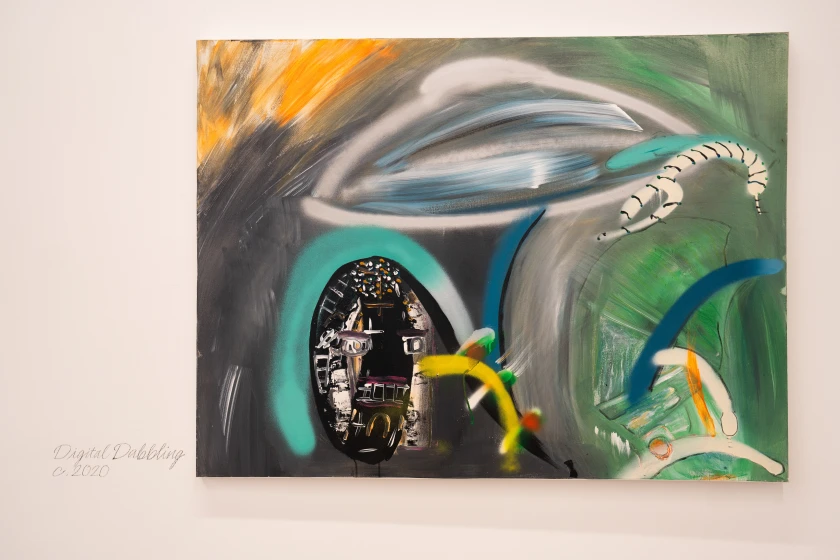
George Clinton paints the Mothership
George Clinton expands his Afrofuturist universe through paintings, now on display in Chicago

Though he is colorblind, he has created a variety of vibrant motherships using acrylic, spray paint and charcoal.
#georgeclinton #funk #music
Spider-Man: Brand New Day' First Reactions...

Critics who have pre-screened the new #Spidermanbrandnewday movie have been overwhelmingly positive. I can't wait to see it in theaters
#SpiderManBrandNewDay is easily my favorite Holland-led Spider-Man movie. It isn’t CGI goop or a bunch of fan-service nonsense. It’s exciting, emotional, and the best-looking MCU movie in a long time.
— Kevin Wozniak (@kevflix) July 28, 2026
Really good stuff. Had a blast! pic.twitter.com/p4NAkd7yMO