Text from article (edited for length):
 D’Souza positions Objection as a good-faith effort to reform journalism. For him, it’s a new watchdog out to patrol those other watchdogs that he believes have lost their way. Yet, notably, he wouldn’t name a single example of accountability-oriented reporting of which he does approve, saying he has concerns about the “entire enterprise.”

Among other criticisms, D’Souza dismisses the value of anonymous sources, believing they are discrediting, no matter the justification. Objection dings journalists who utilize them under almost all circumstances, except some reporting involving minors and national security. Yet he’s OK with Objection clients secretly funding adjudications, as Thiel did with Gawker. He notes that “there’s a risk of retribution” for his platform’s customers, before citing the Streisand effect, a media phenomenon in which attempts to suppress or censor information can unintentionally draw far more public attention to it. (This is where I’ll note that Sackler, who either didn’t think or care to cloak his identity when filing his “objection,” didn’t respond to my inquiry for this coverage.)

....

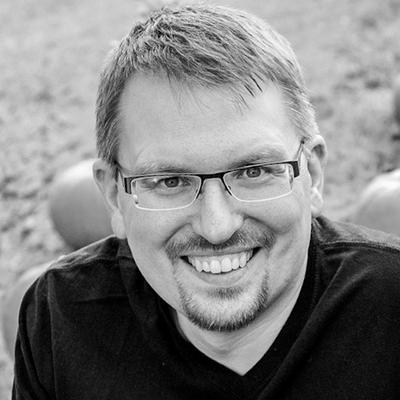
D’Souza is concerned about what he views as the affliction of journalism on the powerful.
Text from article (edited for length): D’Souza positions Objection as a good-faith effort to reform journalism. For him, it’s a new watchdog out to patrol those other watchdogs that he believes have lost their way. Yet, notably, he wouldn’t name a single example of accountability-oriented reporting of which he does approve, saying he has concerns about the “entire enterprise.” Among other criticisms, D’Souza dismisses the value of anonymous sources, believing they are discrediting, no matter the justification. Objection dings journalists who utilize them under almost all circumstances, except some reporting involving minors and national security. Yet he’s OK with Objection clients secretly funding adjudications, as Thiel did with Gawker. He notes that “there’s a risk of retribution” for his platform’s customers, before citing the Streisand effect, a media phenomenon in which attempts to suppress or censor information can unintentionally draw far more public attention to it. (This is where I’ll note that Sackler, who either didn’t think or care to cloak his identity when filing his “objection,” didn’t respond to my inquiry for this coverage.) .... D’Souza is concerned about what he views as the affliction of journalism on the powerful.
2
Text from article:
 His ideas have been nurtured within a close and influential cohort. “There’s this group of us, 15, 20 of us, that are gay entrepreneurs, and we’ve all holidayed together for years,” D’Souza told The Sydney Morning Herald in February. “It’s an extraordinarily tight community that has propelled me, and all of us together, to the heights of capitalism.”

To him, it’s unsurprising that these paradigm-shifting overachievers are all gay, citing the landmark 1973 book The Best Little Boy in the World, about how the pursuit of ambition and excellence can help closeted young men deflect from their sexuality. D’Souza has observed that his friends are “the best little boys in the world. They all went to the fanciest universities and won all the prizes.”

These men include Thiel, the German biotech billionaire Christian Angermayer and OpenAI chief Sam Altman — who in 2018 described D’Souza to a reporter as “ruthlessly ambitious” and “obsessed with status and power.” In D’Souza’s interview with the Australian newspaper, he explained why: “It’s only the top 1 percent who matter. These are the people who are going to be the value creators” when, in his view, AI soon completely transforms just about every aspect of economic life.
Text from article: His ideas have been nurtured within a close and influential cohort. “There’s this group of us, 15, 20 of us, that are gay entrepreneurs, and we’ve all holidayed together for years,” D’Souza told The Sydney Morning Herald in February. “It’s an extraordinarily tight community that has propelled me, and all of us together, to the heights of capitalism.” To him, it’s unsurprising that these paradigm-shifting overachievers are all gay, citing the landmark 1973 book The Best Little Boy in the World, about how the pursuit of ambition and excellence can help closeted young men deflect from their sexuality. D’Souza has observed that his friends are “the best little boys in the world. They all went to the fanciest universities and won all the prizes.” These men include Thiel, the German biotech billionaire Christian Angermayer and OpenAI chief Sam Altman — who in 2018 described D’Souza to a reporter as “ruthlessly ambitious” and “obsessed with status and power.” In D’Souza’s interview with the Australian newspaper, he explained why: “It’s only the top 1 percent who matter. These are the people who are going to be the value creators” when, in his view, AI soon completely transforms just about every aspect of economic life.
1
Text from article:
 Then, of course, there are billionaires and their heirs. D’Souza believes that “many journalists are more powerful than billionaires,” explaining, “I can’t tell you how many billionaires and CEOs have called me in absolute tears about their lives being destroyed by one article.” He notes that most of them “have no media skill whatsoever” and have “never sought the spotlight,” so he contends that “there’s a massive power asymmetry.”

To D’Souza, such “quiet, boring,” super-rich clients in fact aren’t resourced enough — which is why they need Objection. “Someone who is our ideal customer, it’s not Elon [Musk], who has hundreds of millions of combined social media followers, and has the distribution apparatus itself,” referring to his ownership of the networking platform X. “It’s not Peter Thiel, who’s sophisticated and has high distribution. It’s someone like Michael [Sackler], who has low distribution but high wealth.”
Text from article: Then, of course, there are billionaires and their heirs. D’Souza believes that “many journalists are more powerful than billionaires,” explaining, “I can’t tell you how many billionaires and CEOs have called me in absolute tears about their lives being destroyed by one article.” He notes that most of them “have no media skill whatsoever” and have “never sought the spotlight,” so he contends that “there’s a massive power asymmetry.” To D’Souza, such “quiet, boring,” super-rich clients in fact aren’t resourced enough — which is why they need Objection. “Someone who is our ideal customer, it’s not Elon [Musk], who has hundreds of millions of combined social media followers, and has the distribution apparatus itself,” referring to his ownership of the networking platform X. “It’s not Peter Thiel, who’s sophisticated and has high distribution. It’s someone like Michael [Sackler], who has low distribution but high wealth.”
1
Text from article:
 Objection assigns a human investigator — at the $2,000 price tier, a college graduate; for $10,000, a former CIA or FBI agent — to gather evidence, which is displayed as exhibits. In my case, just about all of it appeared to be extraneous documentation, like incorporation paperwork for Sackler’s firm, which seemed irrelevant to the matter at hand. Then it prompts a group of AI models (including the name-brand ones such as Claude, ChatGPT and Grok) to act as its jury, analyzing the evidence. D’Souza promises that conclusions will be transparent: “We expose all the math that underpins what we do.”

Once Objection issues an adjudication, satisfied clients can pay an extra fee to promote the finding “so it engages with the disinformation as it spreads through social media,” D’Souza says. “What I know from the Gawker litigation, having dealt with not just Hulk Hogan but dozens of other parties who felt like they were aggrieved by the media, is that they actually don’t want a financial remedy. What they want is a moral victory. Most of them just want a PDF that they can send to their investors and their family which says, ‘I did not go to Epstein Island.’ “

Text from article: Objection assigns a human investigator — at the $2,000 price tier, a college graduate; for $10,000, a former CIA or FBI agent — to gather evidence, which is displayed as exhibits. In my case, just about all of it appeared to be extraneous documentation, like incorporation paperwork for Sackler’s firm, which seemed irrelevant to the matter at hand. Then it prompts a group of AI models (including the name-brand ones such as Claude, ChatGPT and Grok) to act as its jury, analyzing the evidence. D’Souza promises that conclusions will be transparent: “We expose all the math that underpins what we do.” Once Objection issues an adjudication, satisfied clients can pay an extra fee to promote the finding “so it engages with the disinformation as it spreads through social media,” D’Souza says. “What I know from the Gawker litigation, having dealt with not just Hulk Hogan but dozens of other parties who felt like they were aggrieved by the media, is that they actually don’t want a financial remedy. What they want is a moral victory. Most of them just want a PDF that they can send to their investors and their family which says, ‘I did not go to Epstein Island.’ “
1
Text from article (edited for length):
 D’Souza positions Objection as a good-faith effort to reform journalism. For him, it’s a new watchdog out to patrol those other watchdogs that he believes have lost their way. Yet, notably, he wouldn’t name a single example of accountability-oriented reporting of which he does approve, saying he has concerns about the “entire enterprise.”

Among other criticisms, D’Souza dismisses the value of anonymous sources, believing they are discrediting, no matter the justification. Objection dings journalists who utilize them under almost all circumstances, except some reporting involving minors and national security. Yet he’s OK with Objection clients secretly funding adjudications, as Thiel did with Gawker. He notes that “there’s a risk of retribution” for his platform’s customers, before citing the Streisand effect, a media phenomenon in which attempts to suppress or censor information can unintentionally draw far more public attention to it. (This is where I’ll note that Sackler, who either didn’t think or care to cloak his identity when filing his “objection,” didn’t respond to my inquiry for this coverage.)

....

D’Souza is concerned about what he views as the affliction of journalism on the powerful.
Text from article (edited for length): D’Souza positions Objection as a good-faith effort to reform journalism. For him, it’s a new watchdog out to patrol those other watchdogs that he believes have lost their way. Yet, notably, he wouldn’t name a single example of accountability-oriented reporting of which he does approve, saying he has concerns about the “entire enterprise.” Among other criticisms, D’Souza dismisses the value of anonymous sources, believing they are discrediting, no matter the justification. Objection dings journalists who utilize them under almost all circumstances, except some reporting involving minors and national security. Yet he’s OK with Objection clients secretly funding adjudications, as Thiel did with Gawker. He notes that “there’s a risk of retribution” for his platform’s customers, before citing the Streisand effect, a media phenomenon in which attempts to suppress or censor information can unintentionally draw far more public attention to it. (This is where I’ll note that Sackler, who either didn’t think or care to cloak his identity when filing his “objection,” didn’t respond to my inquiry for this coverage.) .... D’Souza is concerned about what he views as the affliction of journalism on the powerful.
2
1